

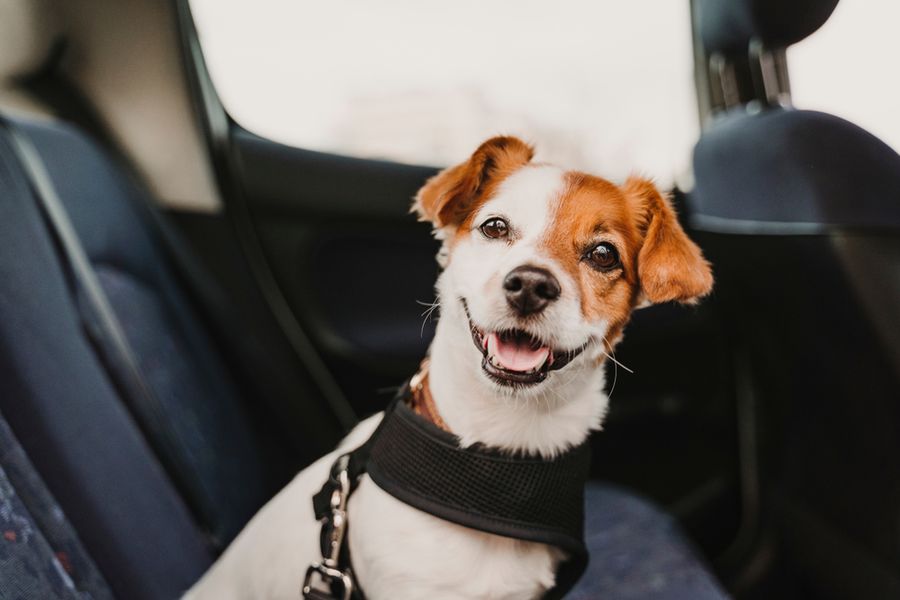
A dog riding loose in the back seat can become a distraction during an ordinary drive and face serious forces during a collision. A vehicle restraint harness can limit movement, but the words “crash-tested” do not automatically mean every product has met the same standard. Choosing carefully means looking beyond marketing language to testing methods, independent certification, fit, and attachment design. The right harness should restrain the dog securely while remaining practical enough to use on every trip.
Understand What “Crash-Tested” Actually Means
Pet vehicle restraints are not all evaluated under one mandatory federal standard in the way child car seats are. Manufacturers may conduct their own testing, use different procedures, or describe a product as crash-tested even when it has not received independent certification.
That makes the distinction between tested and independently certified especially important. The Center for Pet Safety operates a voluntary certification program for harnesses that meet its independently developed testing and performance requirements.
Consumers should know that a manufacturer saying a harness was "crash-tested" does not necessarily mean the product passed an independent crash-protection standard. When comparing products, therefore, look for details about the test protocol, test speed, dog-dummy weights, and whether results were evaluated by an outside organization.
Look for Independent Certification
Independent certification provides consumers with another layer of information beyond manufacturer claims. Current certified harnesses include models such as the Sleepypod Clickit Range, Clickit Sport, and Clickit Terrain, along with the Saker Canine Bomber Harness.
The Sleepypod Clickit Range, for example, received a five-star rating after independent testing in November 2024. Its certification covers regular and long versions and is rated for dogs up to 110 pounds.
Certification should not be the only factor in a purchase, but it gives owners a clearer basis for comparison. It shows that a product has been evaluated against defined criteria rather than relying solely on a company’s description of its own testing.
Compare Manufacturer Crash Tests Carefully
A harness without independent certification is not necessarily untested. Some manufacturers publish detailed information about their own testing, allowing consumers to evaluate what was actually done.
The Ruffwear Load Up, for instance, underwent dynamic testing with 25-, 45-, and 75-pound dog mannequins using conditions based on the federal child-restraint test standard. Ruffwear also explicitly states that the harness is not certified by the Center for Pet Safety and would not meet that organization’s current forward-excursion limits.
Kurgo states that its Enhanced Strength Tru-Fit Smart Harness has been crash-tested for dogs weighing up to 75 pounds.
Details like these are more useful than the phrase “crash-tested” by itself. They allow owners to see how the product was evaluated and determine whether independent certification matters to their purchasing decision.
Avoid Long Extension Tethers
How a harness connects to the vehicle can be just as important as the harness itself. A long tether may appear attractive because it allows a dog to move around the back seat, but greater freedom can also create greater movement during a sudden stop or crash.
Independent pet-safety guidance recommends avoiding extension tethers and zipline-style connections because they can increase the dog’s movement and potentially undermine the protection offered by a properly tested harness.
Follow the restraint manufacturer’s installation instructions exactly rather than combining the harness with an unrelated seat-belt attachment. An accessory that was not included in the testing can change how the entire restraint system performs.
Get the Fit Right Before Driving
Even a well-tested harness needs to fit correctly. Measure the dog according to the manufacturer’s sizing instructions rather than choosing a size based only on breed or body weight.
The harness should sit securely around the torso without obvious looseness, twisting, or hardware positioned incorrectly. Owners should also confirm that their dog falls within the tested or certified weight range for the specific size they purchase.
Introduce the harness gradually before taking a long drive. Short trips can help a dog become accustomed to wearing the restraint and remaining secured in the back seat.
Choose Evidence Over the Label
A safer car harness is not simply the product with the strongest advertising claim. Look for independent certification when available, examine the details behind manufacturer crash tests, choose the correct size, and avoid attachments that introduce excessive movement.
Most importantly, use the restraint consistently and exactly as instructed. Taking a few extra minutes to investigate how a harness was tested can help distinguish a genuine vehicle-safety product from one that merely keeps a dog from wandering around the car.